top of page
Silhouette
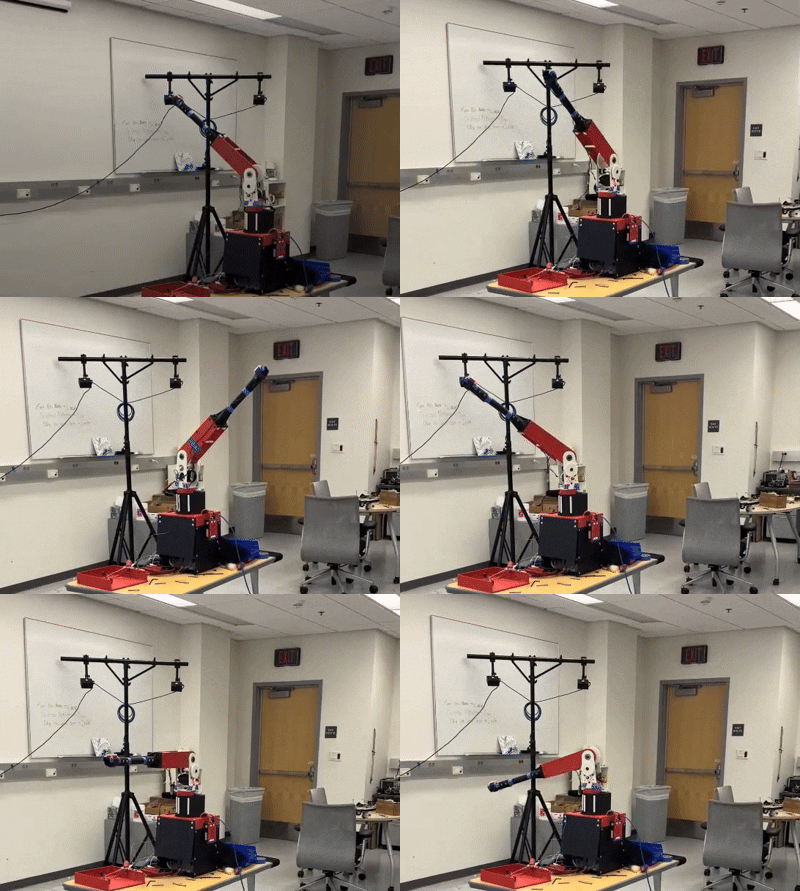
Image 1) This video shows the 2 degrees of freedom being calibrated in the motion capture space. There are ArUco markers on the ground assisting the 8-camera system as well as infrared LEDs on the robot to track its movements.
The Context.
The Apple Watch. Best known for its "step count" feature, the metric can be a bit ... misleading. My team and I found it hard to believe that the step count was precise, so we decided to conduct research to answer the question: is the Apple Watch step count accurate?
The Problem.
Previous research was conducted using human participants. The actual process of manually counting human steps is very "caveman," and a solution to this issue would demand high volume data collection and accuracy.
The Solution.
My research team and I developed a robotic turret and arm mechanism with 2 degrees of freedom. The robot was capable of reproducing synthetic motion data with near-perfect consistency to replicate human participants. On top of being more precise, this method was also capable of high volume data collection: the robot was fully autonomous and capable of overnight trials!
The Outcome.
I am still conducting research, specifically with UCI's motion capture system which is the ground-truth of comparisons. My partner and I are also in the process of submitting a research paper on the topic to a handful of scientific journals. We aim to publish our findings in IEEE during the Spring of 2026.
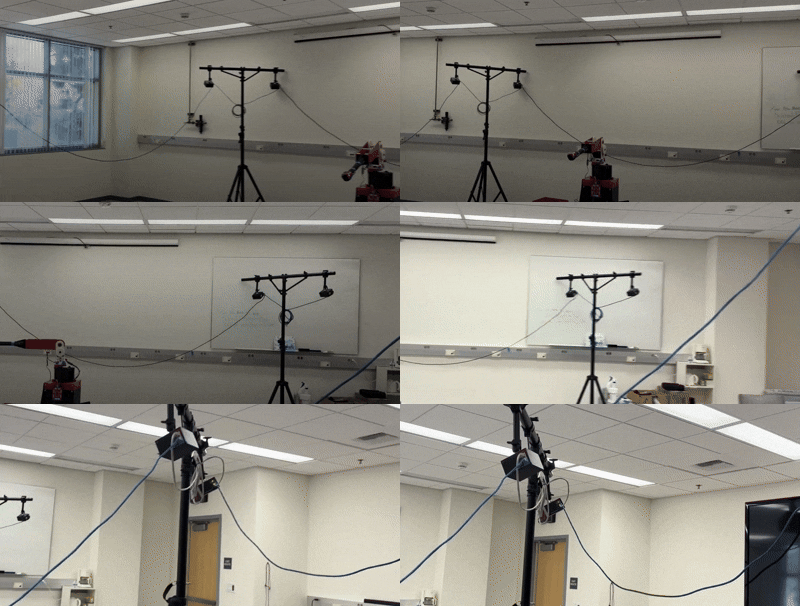
Image 2) This graphic displays UCI's motion capture system, capable of tracking targets with fiducial markers with sub-millimeter accuracy.
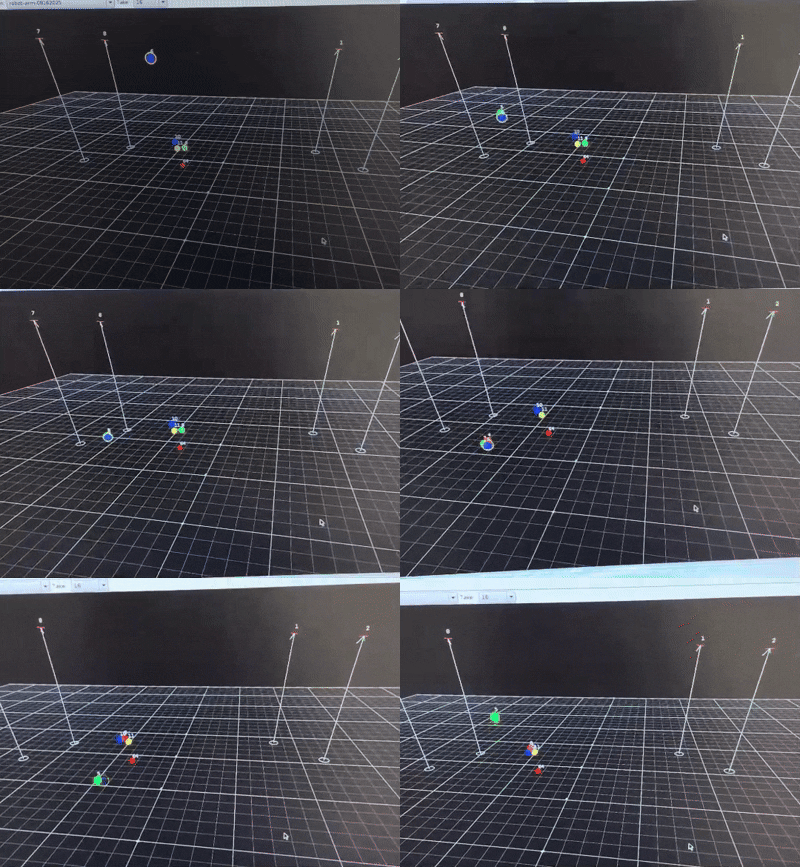
Image 3) This video shows an example of an auto-trajectory sequence the robot can follow. We used over 24 settings to measure accuracy and introduced random variation.
bottom of page